Introduction
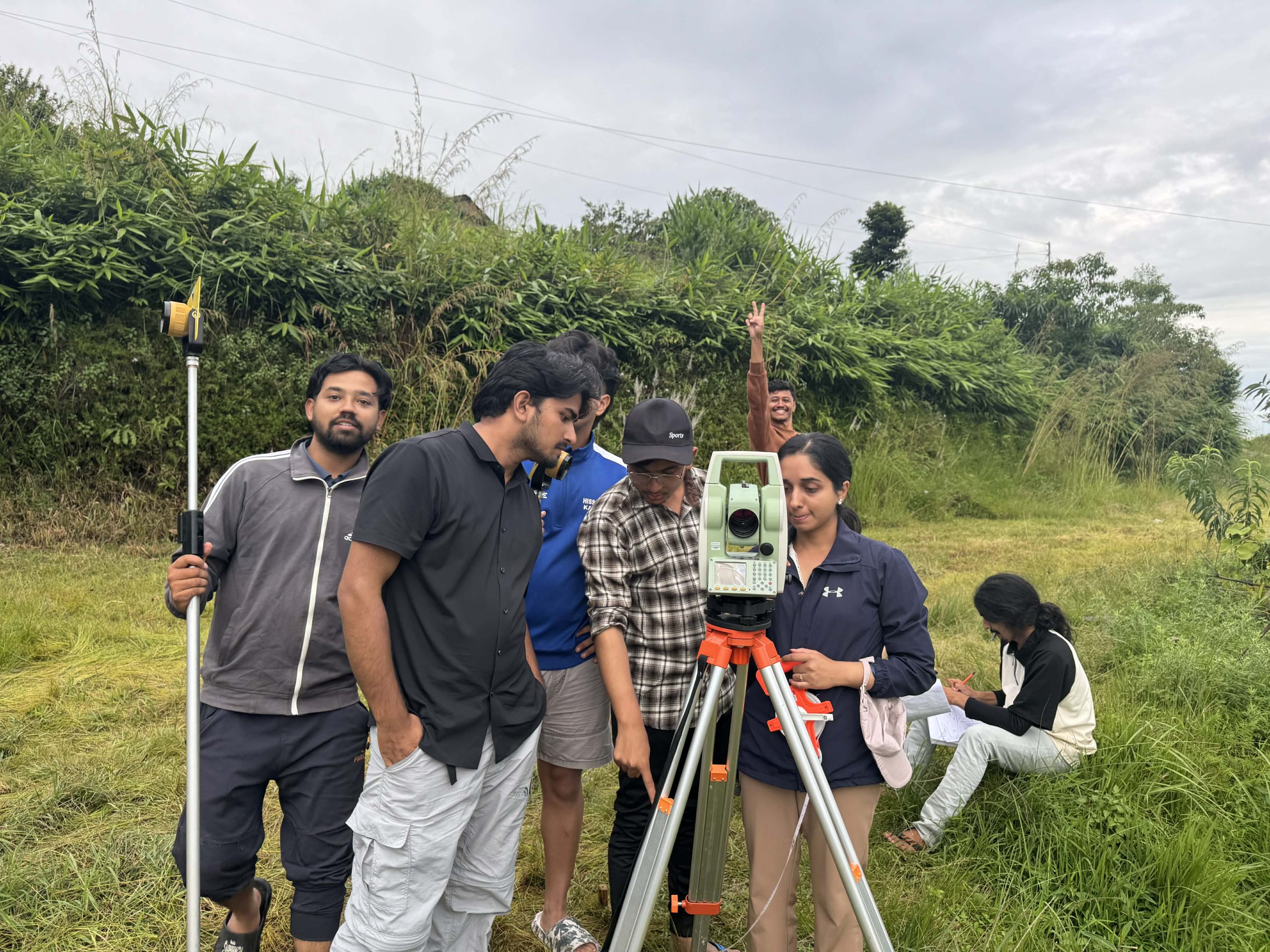
The Bachelor of Civil Engineering program at the School of Engineering is designed to produce skilled, innovative, and responsible civil engineers capable of contributing to national infrastructure development and global challenges. The program is affiliated with Pokhara University and follows a comprehensive curriculum that blends theoretical knowledge, practical training, and research exposure.
Over the course of four years (eight semesters), students engage in a broad spectrum of civil engineering disciplines—ranging from applied sciences, engineering fundamentals, and computational techniques to specialized fields like structural, geotechnical, environmental, water resources, and transportation engineering. The curriculum also integrates engineering geology, project management, hydropower, irrigation, and professional ethics, ensuring a holistic educational experience.
Students gain hands-on experience through surveying, laboratory work, field projects, design practices, and internships, which prepare them for real-world engineering challenges. The inclusion of Project I, Project II, and Internship components enhances their practical understanding and professional competence.
Graduates from this program are well-equipped to pursue careers in construction, consulting, design, water resources management, and public infrastructure development, or to continue higher studies and research in advanced engineering fields. The program aims to develop engineers who can not only design and manage infrastructure sustainably but also lead innovation in Nepal’s rapidly evolving construction and development sectors.
In Nepal:
- Work in construction companies, consulting firms, and government projects.
- Design and manage roads, bridges, irrigation systems, and hydropower plants.
- Serve in urban planning, environmental management, and disaster-resistant infrastructure.
- Join municipalities, the Department of Roads, and Water Supply projects as professional engineers.
- Contribute to hydropower, transportation, and housing development sectors.
Abroad:
- Opportunities in engineering consultancies and international infrastructure projects.
- Work as Structural, Geotechnical, Transportation, or Environmental Engineers.
- Contribute to projects in Japan, Australia, Middle East, Europe, and the USA.
- Engage in research, innovation, and sustainable construction technologies.
- Pursue higher education and professional certifications in specialized fields.